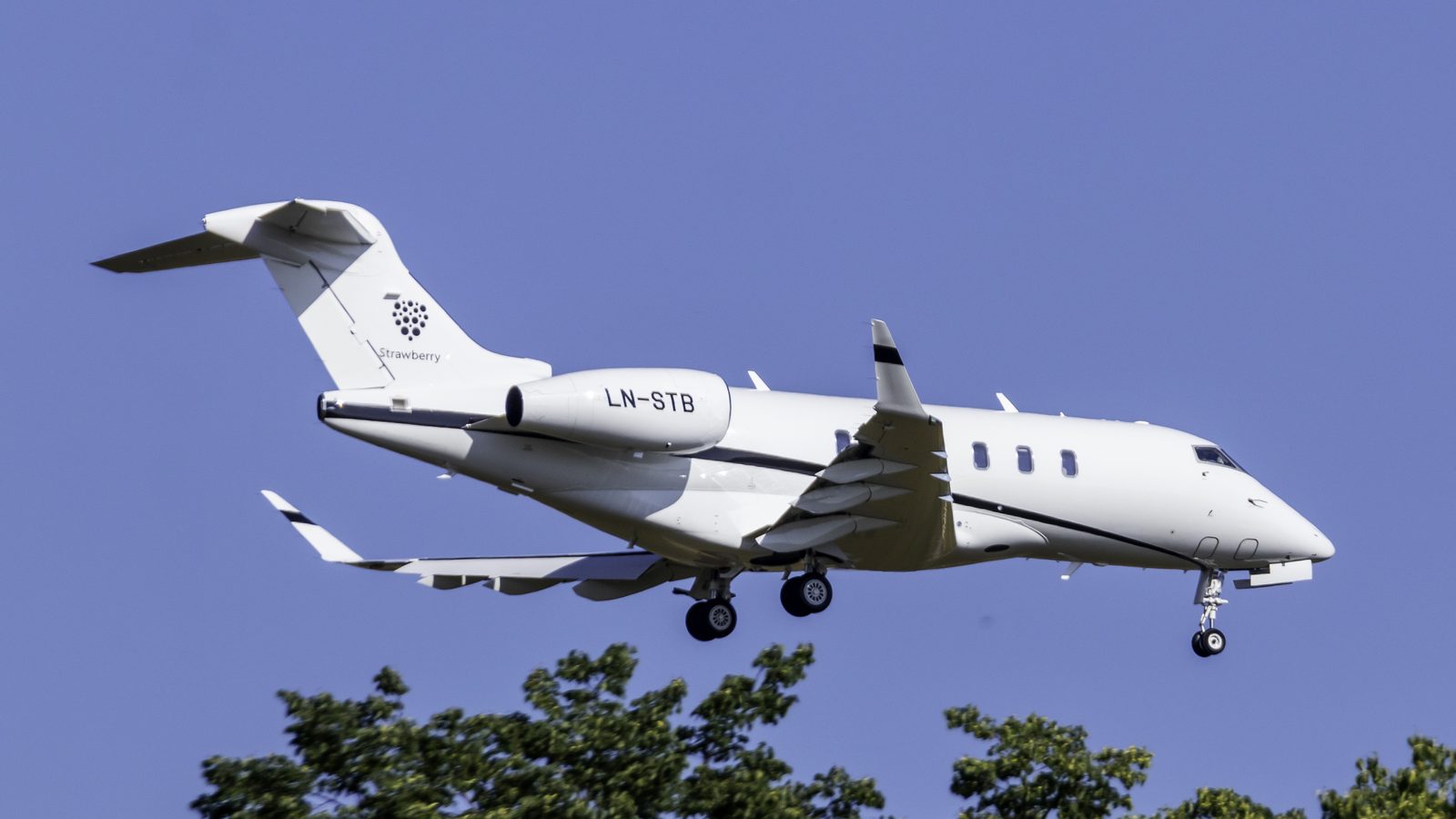
President Trump posted on Truth Social on 7 September 2026 that Bombardier would no longer be allowed to sell aircraft in the United States unless it started manufacturing in the country. "NO MORE SELLING BOMBARDIER IN THE UNITED STATES," he wrote. He said the company must "build here."
Reuters and AeroTime both reported the same day that no executive order, tariff list or regulatory filing accompanied the post. Aircraft certification in the United States sits with the FAA. That authority is tied to airworthiness, not to a social media account.
Bombardier already has a large US footprint. In a statement on 7 September the company said it works with about 2,800 US suppliers across 47 states and spends more than USD 2.5 billion with them each year. Wings for the Global 8000 are built in Red Oak, Texas. Flight-control parts are made near Los Angeles. Honeywell builds Challenger engines in Phoenix. Collins Aerospace builds avionics in Cedar Rapids, Iowa. A new site in Fort Wayne, Indiana, is due to open before the end of 2026.
Kansas is the political problem. Bombardier's US headquarters is there. Senator Jerry Moran, a Kansas Republican, objected within hours. NBC News reported that both Kansas senators contacted the White House about the effect on local jobs.
This is not the first pass at Bombardier this year. In January Trump threatened to pull type certificates on Global aircraft and talked about a 50 percent tariff unless Transport Canada certified four Gulfstream types. Transport Canada then approved the G500 and G600 on 15 February 2026 and the G700 and G800 on 23 February. AeroTime notes that the Global 8000 received an FAA type certificate in December 2025, and that Bombardier aircraft have qualified for exemption under the United States-Mexico-Canada Agreement.
For an operator or owner the practical question is simple. Is a Global, Challenger or Learjet going to be barred from US sale, import or operation? As of 11 September, no. The FAA has not withdrawn certificates. Customs has not published a new ban. The post is a trade threat in a week when Canada also moved on counter-tariffs.
What it does do is add political risk to residual values and to any US delivery slot on a Canadian-built airframe. Lenders and lessors will ask about it. So will US-based flight departments that were about to sign.
Goodall Aviation does not fly these aircraft. We arrange ACMI and wet lease cover for operators who do. If a US sales ban ever became a rule, the first hit would be new deliveries and US pre-owned trades, not an overnight grounding. Until the FAA or the Commerce Department puts something on paper, treat the post as noise with a long tail. If you need lift while the politics settle, ask.
Sources: reuters.com, aerotime.aero, ainonline.com, nbcnews.com